

Introduction
Have you ever imagined turning a device on or off while being thousands of miles away? That’s exactly what this project is about. Using an ESP32 board, we show how even a simple built‑in LED can be controlled remotely over the internet. It’s a small but powerful example of what IoT makes possible.
About the Project
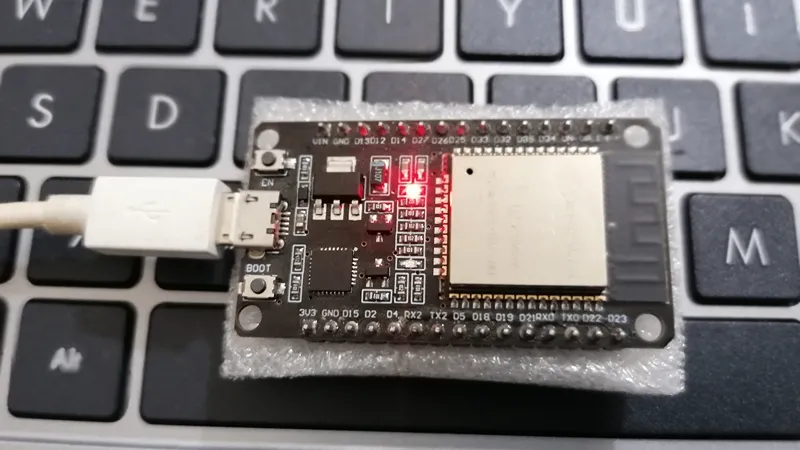
In this demo, the ESP32 acts as our smart device. The LED on the board becomes the “thing” we want to control. From anywhere in the world, a user can send a command, and the LED instantly responds. It’s simple, clear, and a perfect way to demonstrate global connectivity.
I have put the technical details of the project on my GitHub, which you can check out in the relevant repository
Video of this project on my LinkedIn.
Why We Use MQTT
To make this communication smooth, the project uses MQTT — a lightweight messaging protocol designed for IoT. I’ve already shared a separate post explaining what MQTT is, so here we’ll just focus on how it helps us. By using a public MQTT broker (introduced earlier on my site), you don’t need to set up your own server. That means anyone can try this project without extra hassle.
How It Works
Step 1: Sending a Command
You send a command from your phone or computer.
Step 2: Passing Through the Internet
The message travels through the internet to the public MQTT broker.
Step 3: ESP32 Receives the Command
The ESP32 receives the command and changes the LED state.
Step 4: Status Feedback
The ESP32 also sends back a status update, so you know if the LED is ON or OFF.
No complicated setup — just a clear example of remote control in action.
Key Highlights
- Global access: Control your ESP32 from anywhere in the world.
- Simple demo: A built‑in LED makes the project easy to follow.
- Instant feedback: See the LED respond right away.
- Future‑ready: Security and scalability can be added for real‑world use.
Demo in Action
Imagine sitting in a café in one city, and with a single click, the LED on your ESP32 lights up in another country. That’s the magic of IoT — bridging distance with technology.
What’s Next
Expanding the Project
- Controlling multiple devices.
- Adding sensors for monitoring.
- Building dashboards or mobile apps for user‑friendly control.
Real‑World Applications
- Smart homes.
- Industrial automation.
- Remote monitoring systems.
Conclusion
This project shows how an ESP32 can be controlled remotely from anywhere in the world. It’s a simple LED today, but tomorrow it could be lights, appliances, or even industrial machines.
Call to Action
Interested in learning how to set up this project step‑by‑step? Reach out to me directly via WhatsApp or Email, and I’ll be happy to guide you through the details.