


Thread protocol is a modern mesh networking protocol designed to connect smart devices reliably and securely. With low power consumption and strong scalability, it is becoming a key foundation for next‑generation IoT solutions.
Introduction to Thread
Thread protocol is an IPv6‑based, low‑power, secure mesh networking protocol designed specifically for the Internet of Things (IoT). Developed by the Thread Group—a consortium including Google (Nest Labs), Apple, Qualcomm, and others—it addresses the limitations of older IoT protocols by offering reliable connectivity, scalability, and interoperability across smart devices
In AIoT (Artificial Intelligence of Things) ecosystems, Thread plays a crucial role by enabling seamless communication between sensors, actuators, and AI‑driven control systems.
How Thread Works
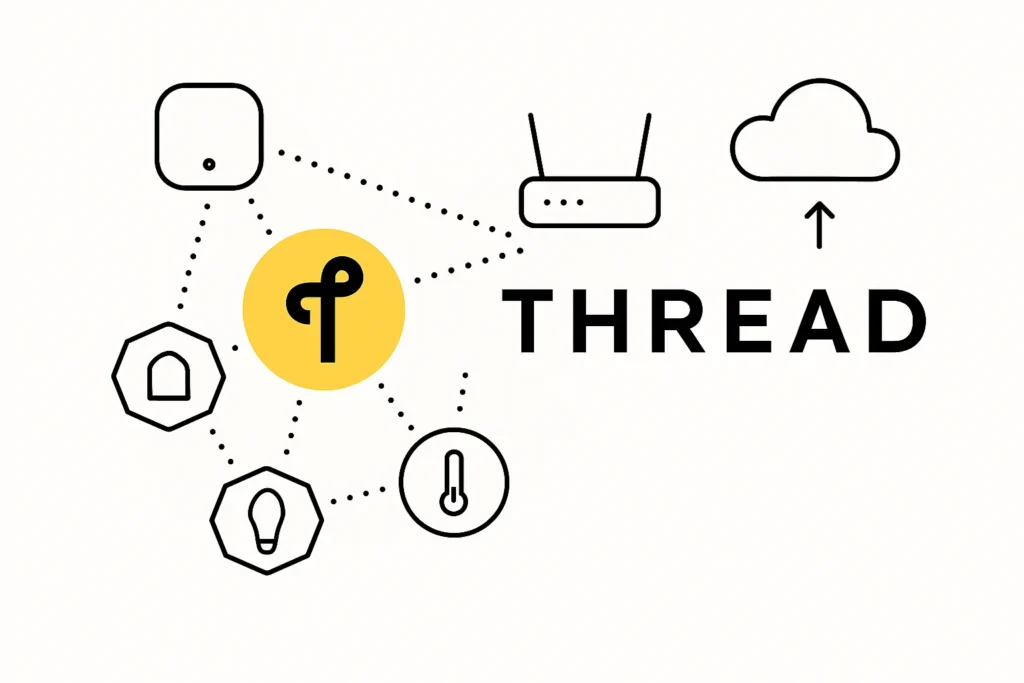
Based on IEEE 802.15.4 and 6LoWPAN
Thread operates over the IEEE 802.15.4 wireless standard at 2.4 GHz, using 6LoWPAN to transport IPv6 packets. This allows each device to have a unique IP address, enabling direct cloud connectivity without complex gateways.
Mesh Networking Topology
Thread uses a self‑healing mesh network, meaning:
- Devices can communicate even if one node fails.
- The network automatically reroutes data for optimal performance.
- Range can be extended by adding more nodes.
Key Features of Thread
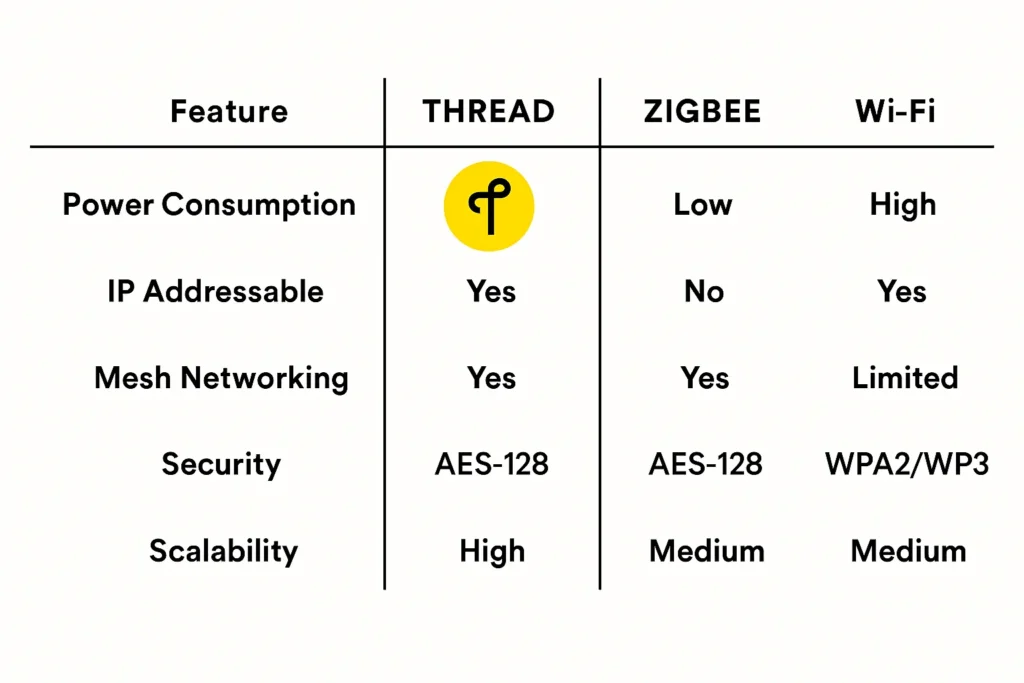
Low Power Consumption
Thread is engineered for ultra‑low energy usage, making it perfect for battery‑powered devices that need to operate for months or even years without replacement. By using efficient data transmission and sleep modes, Thread minimizes power drain — a critical factor for remote sensors in agriculture, wearable health trackers, or environmental monitoring devices.
High Security
Security is built into Thread’s core. It uses AES‑128 encryption for all communications, ensuring that data remains private and tamper‑proof. The secure commissioning process prevents unauthorized devices from joining the network, which is especially important in smart homes and industrial IoT environments where sensitive data is transmitted.
Scalability
Thread networks can scale from a handful of devices to hundreds of nodes without losing performance. Its mesh architecture distributes communication paths, so adding more devices actually strengthens the network rather than overloading it. This makes it ideal for large‑scale smart city deployments or complex industrial systems.
Interoperability
Because Thread is IP‑based, it can seamlessly integrate with other IP networks and emerging standards like Matter. This means devices from different brands can work together without proprietary gateways, reducing fragmentation and making IoT ecosystems more future‑proof.
Advantages Over Other IoT Protocols
Common Use Cases
Smart Home Automation
- Lighting control.
- Smart locks.
- Climate control systems.
Industrial IoT
- Predictive maintenance sensors.
- Energy management systems.
AIoT Applications
- Energy management systems.
- Intelligent building management.
- Adaptive traffic control in smart cities

Example Scenario: A Unified Smart Building with Thread
Imagine a modern office building equipped with dozens of smart devices — motion sensors in hallways, temperature and humidity sensors in each room, smart lighting systems, connected HVAC units, and security cameras. All of these devices use the Thread protocol to form a self‑healing mesh network.
When an employee enters the building, a motion sensor near the entrance detects movement and securely sends a signal through the Thread network. This triggers the smart locks to grant access, the lights in the lobby to turn on, and the HVAC system to adjust the temperature in the occupied areas. Meanwhile, environmental sensors continuously feed real‑time data to an AI‑driven building management system, which optimizes energy usage by dimming unused areas and adjusting climate control based on occupancy patterns.
Even if one device or connection point fails, Thread’s mesh architecture reroutes the data instantly, ensuring the entire system remains responsive and reliable. The result is a seamless, energy‑efficient, and secure environment where every device works together as part of a unified AIoT ecosystem.
Thread and Matter: The Future of IoT
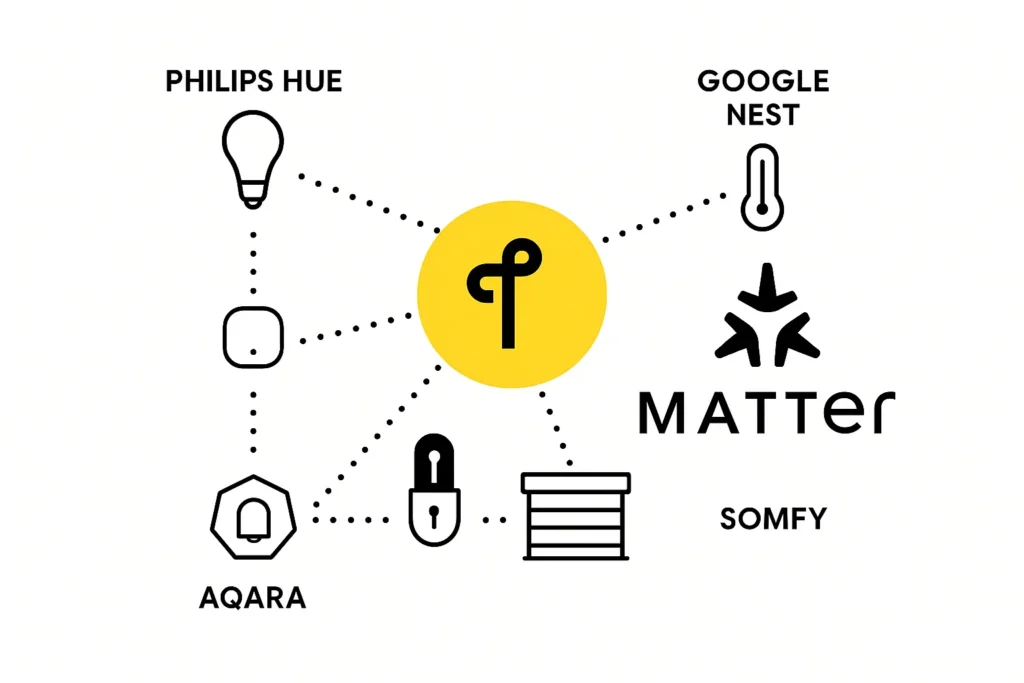
Thread is a key transport layer for the Matter standard, which aims to unify smart home ecosystems across brands. This means devices from different manufacturers can work together seamlessly, reducing fragmentation in the IoT market.
Scenario: A Truly Interoperable Smart Home
Imagine a smart home equipped with:
- Smart lights from Philips Hue.
- Door locks from Yale.
- Thermostat from Google Nest.
- Motion sensors from Aqara.
- Motorized blinds from Somfy.
In the past, each of these devices might have required its own dedicated app and hub, making integration complex and frustrating. With Matter as the common application layer and Thread as the low‑power, self‑healing mesh network, all these devices now “speak” the same language.
Here’s how it works in practice: when the Aqara motion sensor detects movement in the hallway, it sends a secure signal over the Thread network. Matter ensures that this signal is understood by devices from all brands. Instantly, the Philips Hue lights turn on, the Nest thermostat adjusts the temperature to your preferred setting, and if it’s nighttime, the Somfy blinds close automatically.
The result is a seamless, secure, and energy‑efficient smart home where every device — regardless of brand — works together as part of a unified ecosystem.
OpenThread: The Open‑Source Implementation
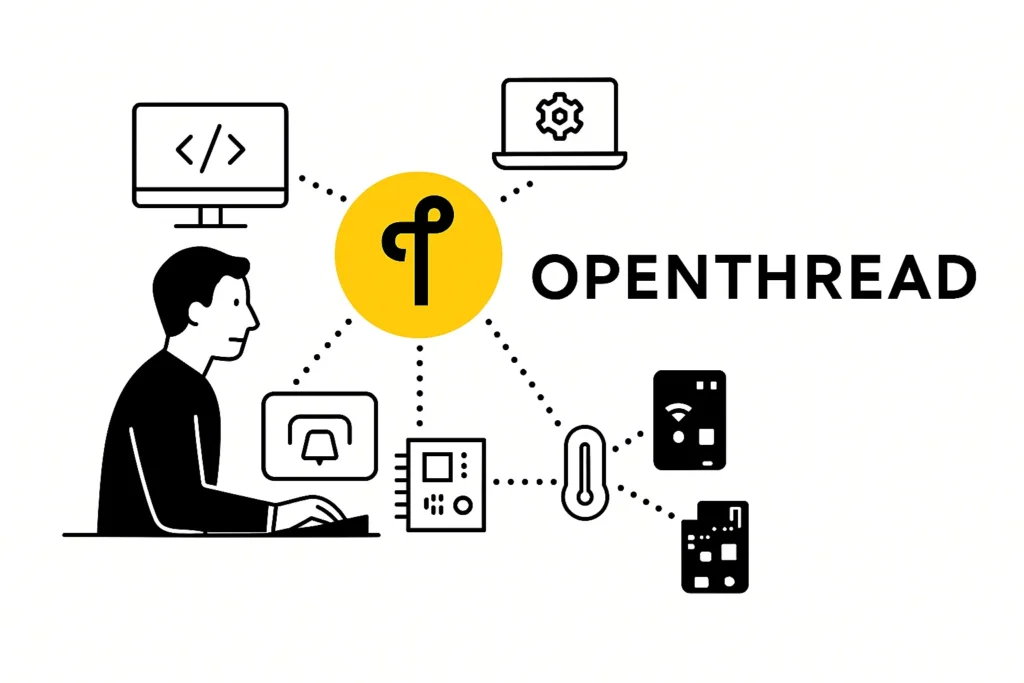
Google’s OpenThread provides a BSD‑licensed implementation of the Thread protocol. Developers can use it to:
- Prototype IoT devices.
- Simulate Thread networks.
- Integrate Thread into existing products.
Conclusion
Thread is redefining IoT connectivity with its secure, scalable, and energy‑efficient design. For AIoT developers, it offers a future‑proof foundation for building interoperable, intelligent, and reliable connected systems.
By adopting Thread, you’re not just choosing a protocol—you’re investing in the next generation of IoT networking.